- The Athletic Entrepreneur
- Posts
- The $1 Royalty Trap Nobody Warns Founders About
The $1 Royalty Trap Nobody Warns Founders About

Athletic Entrepreneur
February 24, 2026
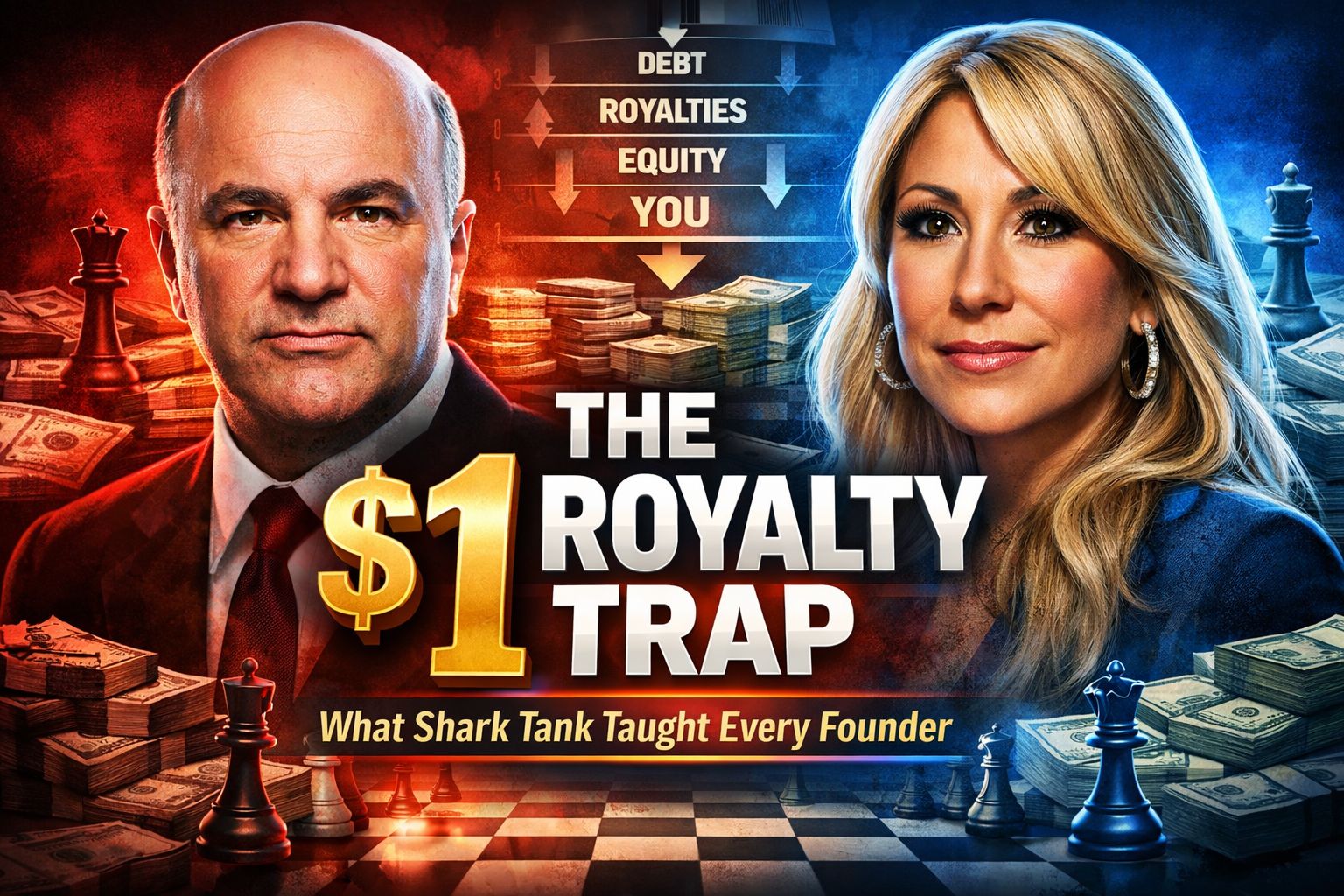
On Shark Tank a quiet financial chess match unfolded between Kevin O'Leary and Lorie — and most founders watching probably missed what really mattered.
An entrepreneur asked for $100,000.
Kevin countered:
$100K investment
$1 royalty per unit sold
Until his $100K is repaid
Minimal equity
Then Lori stepped in:
Same $100K.
But she dropped the royalty to $0.75 per unit.
That wasn’t kindness.
That was strategy.
Because this deal wasn’t about valuation.
It was about who controls your cash flow.
Royalties Aren’t Small — They Scale With Your Success
A dollar sounds harmless.
Until volume shows up.
Let’s make it real.
If your product sells for $25:
10,000 units sold
Kevin collects: $10,000
100,000 units sold
Kevin collects: $100,000
He’s fully repaid.
But here’s the part founders miss:
That money comes off the top.
Before marketing.
Before payroll.
Before inventory.
Before reinvestment.
Royalties don’t care if you’re profitable.
They eat first.
If sales spike early, your investor gets liquid fast — while you may still be cash-starved.
What Kevin Was Really Buying
Kevin wasn’t betting on upside.
He was buying priority position.
This is called waterfall control.
Typical order:
Debt
Royalties
Preferred equity
Common equity (usually you)
Most founders negotiate valuation.
Elite founders negotiate payment order.
Kevin always wants to be paid before your company gets oxygen.
That’s why he loves royalties.
They turn founders into revenue engines servicing capital.
Why Lori’s Move Was Quiet Genius
Lori didn’t argue equity.
She attacked the royalty.
Because every $0.25 reduction protects:
marketing budget
inventory velocity
hiring runway
survival margin
She understood something critical:
Startups don’t die from lack of ideas.
They die from cash-flow compression.
Athletic Entrepreneur Rules for Capital
If you remember nothing else, remember this:
Rule #1 — Revenue is oxygen
Anything that drains it early slows growth.
Rule #2 — Royalties are financial gravity
They feel light until scale arrives.
Then they get heavy fast.
Rule #3 — Don’t optimize for valuation
Optimize for runway + reinvestment.
Rule #4 — Always ask:
Who gets paid first?
How does this affect marketing?
What happens if sales explode?
Am I building equity — or servicing capital?
Money always comes with instructions.
Read them carefully.
Final Thought
This Shark Tank moment wasn’t entertainment.
It was a live demo of investor psychology.
Kevin plays defense.
Lori plays offense.
And founders?
They usually don’t realize they’re in a cash-flow war until it’s already happening.
Train your body.
Train your mind.
Train your cap table.
Because bad deal structures don’t kill companies loudly.
They kill them quietly.
Athletic Entrepreneur