- The Athletic Entrepreneur
- Posts
- THE UNDERBELLY: WHO ACTUALLY OWNS THE FOOTBALL TALENT PIPELINE
THE UNDERBELLY: WHO ACTUALLY OWNS THE FOOTBALL TALENT PIPELINE

Michael Kennedy
April 28, 2026
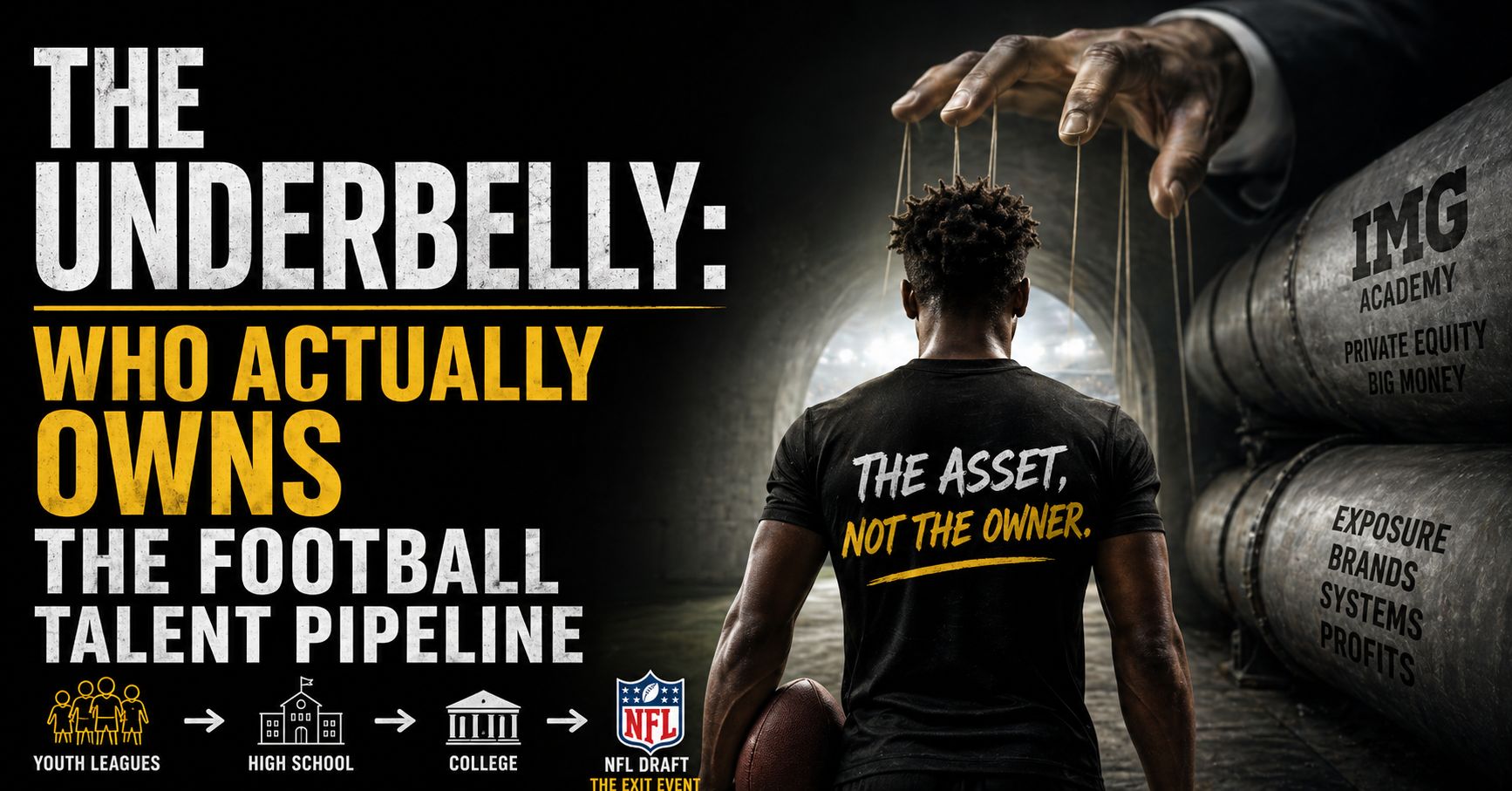
The 2026 NFL Draft looked like every draft before it.
Names called.
Hats on heads.
Families emotional.
Millions watching the dream become real.
But the NFL Draft is not the beginning of the story.
It is the inflection event.
By the time an athlete reaches that stage, the real value creation has already happened years earlier. Skills were developed. Bodies were trained. Exposure was engineered. Risks were taken. Networks were leveraged. Someone invested time, money, systems, and structure.
And in many cases, someone else captured the upside.
That is the real football economy.
THE STATE-LEVEL PIPELINE
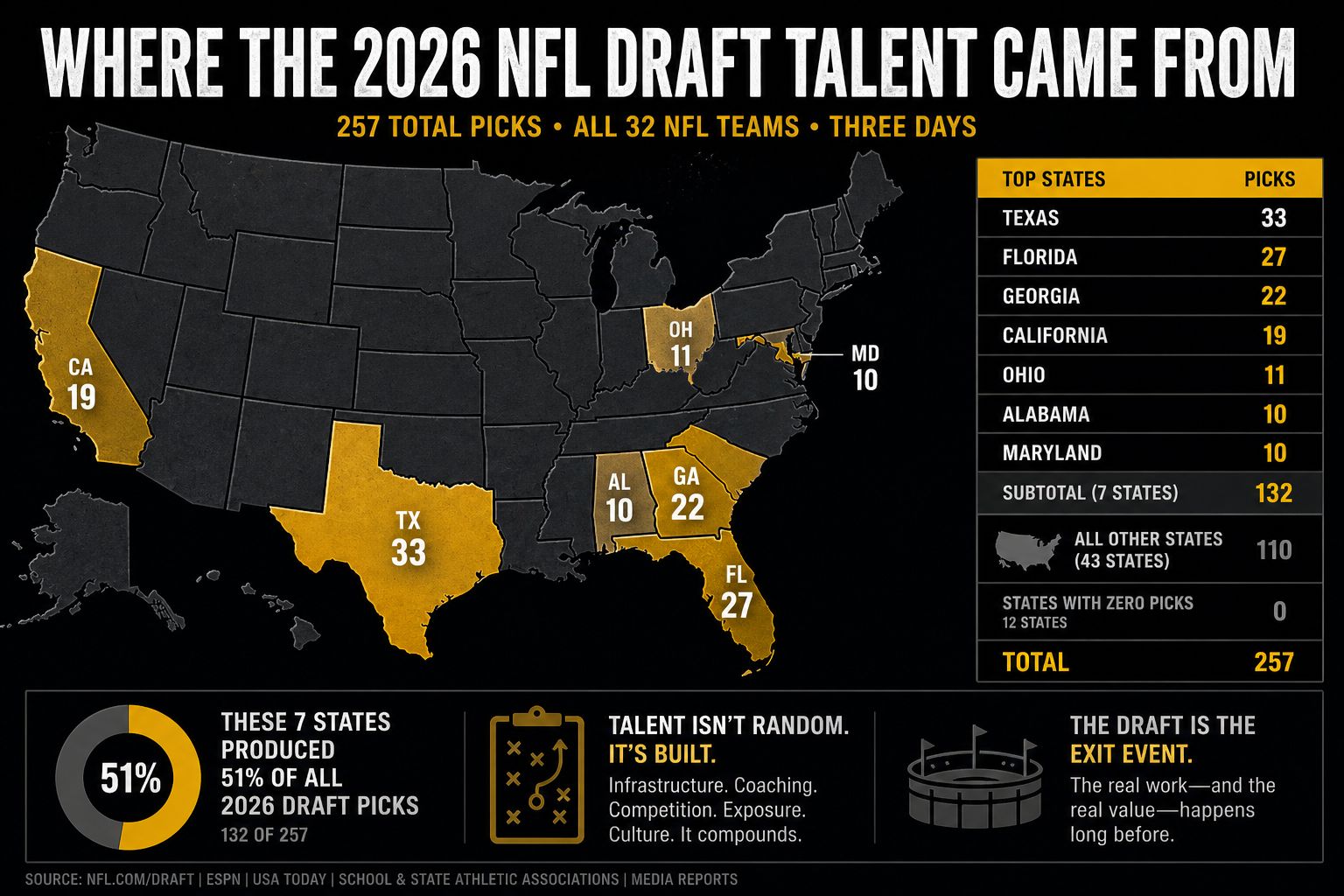
Texas led the 2026 NFL Draft with 33 selections. Florida followed with 27. Georgia had 22. California produced 19.
That is not random talent distribution.
That is infrastructure.
These states operate like mature production hubs.
Strong youth leagues.
Elite high school coaching.
Year-round competition.
Strength and conditioning culture.
Recruiting visibility.
Deep football identity embedded into communities.
Football talent does not simply appear.
It compounds where systems are strongest.
Some states produce athletes.
Others produce pipelines.
That distinction matters.
Because when systems are built early, the athlete entering college often arrives with years of advanced reps, coaching, tactical literacy, and physical preparation already banked.
THE PRIVATE MARKET OF DEVELOPMENT
Then there is the premium tier.
IMG Academy has become one of the clearest examples of elite athlete development as enterprise business.
Families can pay significant tuition for access to high-level facilities, nutrition, strength programs, specialized coaching, academic support, and recruiting visibility.
In practical terms, some teenagers are training in environments that mirror college programs long before they ever sign with one.
That changes competitive reality.
If one athlete has access to advanced systems at age 14 while another depends on limited local resources, the race is already uneven.
This is where youth sports stops being recreation and becomes market structure.
The athlete may still be a teenager.
But the ecosystem around them is already professionalized.
THE GRASSROOTS ARBITRAGE
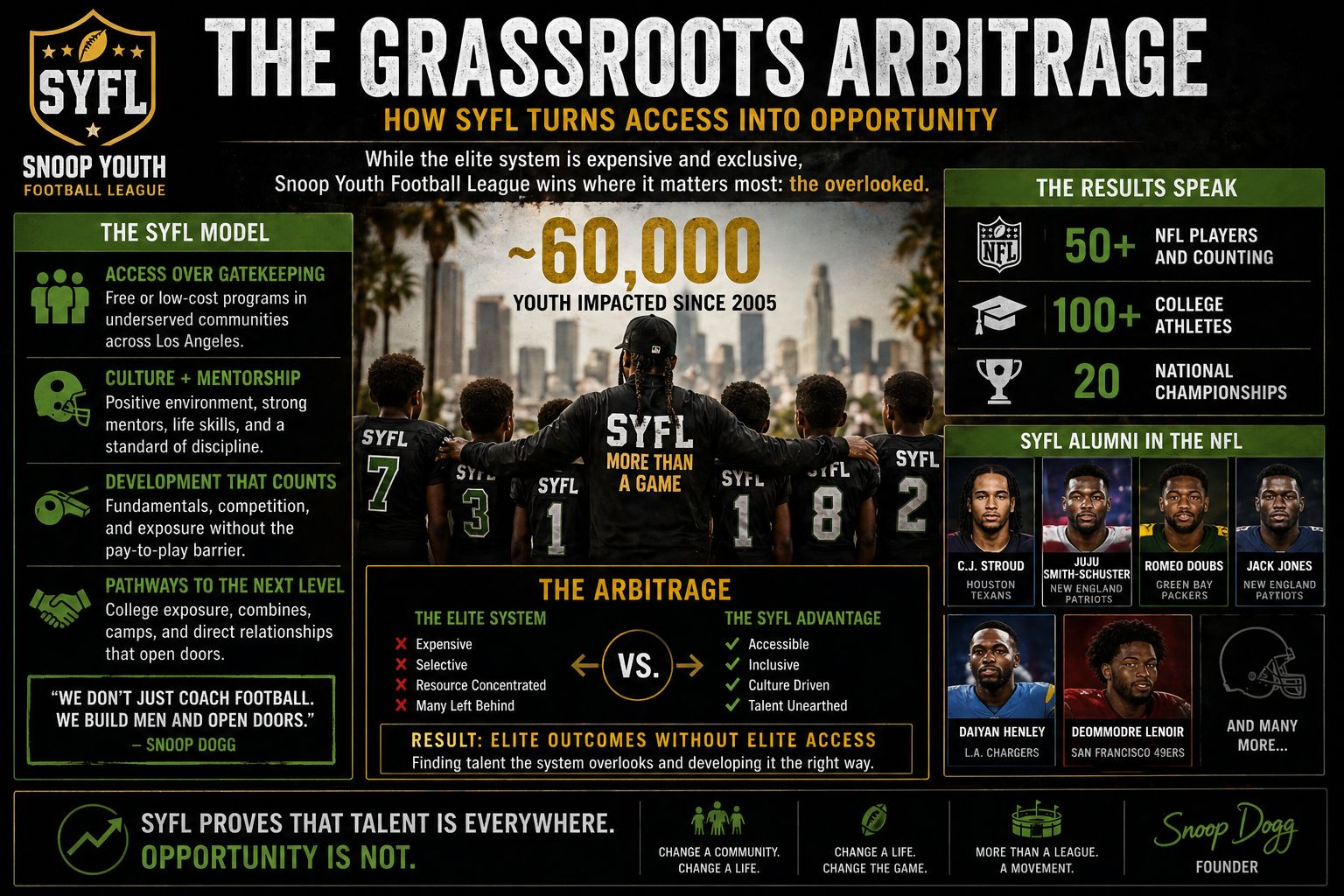
At the opposite end of the funnel sits Snoop Youth Football League.
Founded by Snoop Dogg, the league created access, structure, mentorship, and visibility for communities often underserved by expensive development systems.
Its alumni pipeline into college and professional football proves something important:
Elite outcomes do not only come from expensive systems.
They also come from trust, culture, consistency, and proximity.
That is a lesson many markets ignore.
Sometimes the highest-upside assets are sitting outside traditional gatekeeping structures.
Sometimes value lives where institutions are not looking.
THE RISK REPRICING EVENT
Then came the shift that changed the family decision-making model: concussion awareness.
As more parents became aware of long-term brain health concerns connected to repetitive head impacts, many re-evaluated early tackle football participation.
That did not kill football.
It changed the entry point.
Some families delayed tackle football.
Some moved to flag football first.
Some exited entirely.
Whenever new information enters a market, behavior changes.
That is repricing.
Parents began asking new questions:
How early should contact start?
What is the reward relative to the risk?
Are there safer pathways to similar opportunity?
Once those questions enter the market, the pipeline changes.
THE RISE OF THE FLAG
That created one of the most interesting growth stories in sports.
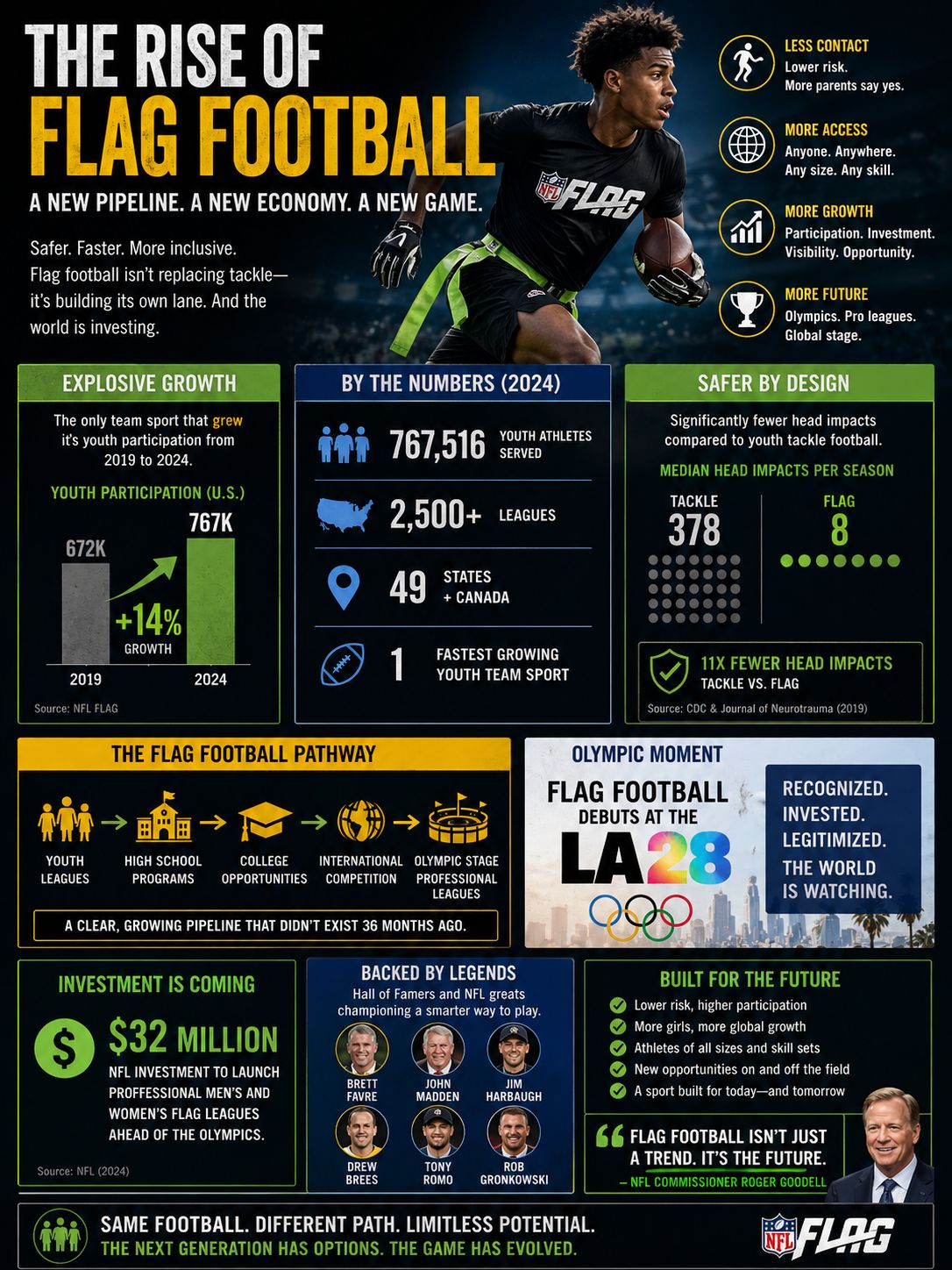
NFL FLAG has expanded nationally. Participation has surged. Schools are adding programs. Visibility is increasing.
And now flag football enters the global stage at the 2028 Summer Olympics.
That matters more than many realize.
Because the moment a sport gains Olympic legitimacy, the pathway expands:
Youth participation.
School participation.
College opportunities.
International prestige.
Commercial sponsors.
Professional leagues.
A lane that barely existed a few years ago now looks investable.
That means a 5’8 fast-twitch athlete who may have struggled to fit traditional tackle archetypes now has another route.
Same ball.
Different economics.
TWO FOOTBALL ECONOMIES
What is emerging now is bifurcation.
Football is no longer one pipeline.
It is two parallel economies.
Tackle football:
Legacy prestige.
NFL dream.
Higher collision.
Traditional route.
Entrenched infrastructure.
Flag football:
Speed.
Space.
Accessibility.
Lower-contact appeal.
Olympic upside.
Global growth potential.
Both can grow simultaneously.
Both can create stars.
But they reward different profiles, different family decisions, and different strategic thinking.
THE OWNERSHIP GAP
Through all of this, one truth remains constant:
The athletes create the value.
The Texas quarterback.
The Florida receiver.
The five-star prospect at IMG.
The overlooked athlete in Snoop’s league.
The next flag star preparing for Los Angeles.
They are the engine.
Yet too many athletes still own little of the upside.
They generate attention but do not own the audience.
They create stories but do not control media distribution.
They build brands but sign them away cheaply.
They create data but never capture it.
They trade performance for visibility while others monetize the system around them.
That is the ownership gap.
WHY NIL IS ONLY THE BEGINNING
Name, Image, and Likeness changed the conversation.
It allowed athletes to participate economically while still competing.
But NIL is only phase one.
Phase two is direct audience ownership.
Email lists.
Communities.
Content channels.
Subscription products.
Courses.
Training IP.
Brand partnerships built on leverage instead of dependency.
Phase three is data ownership.
Performance metrics.
Training systems.
Fan ecosystems.
Personal media archives.
Verified identity and reputation capital.
The athlete of the future may earn from sport, but wealth may come from ownership built around sport.
THE ATHLETIC ENTREPRENEUR ERA
The modern athlete cannot think only like a player.
They must think like an operator.
That means understanding:
Distribution.
Brand equity.
Negotiation.
Audience leverage.
Long-term positioning.
Risk management.
Multiple revenue streams.
Because most careers are short.
But ownership can compound for decades.
The athlete who understands this at 16 has an advantage over the athlete who learns it at 28.
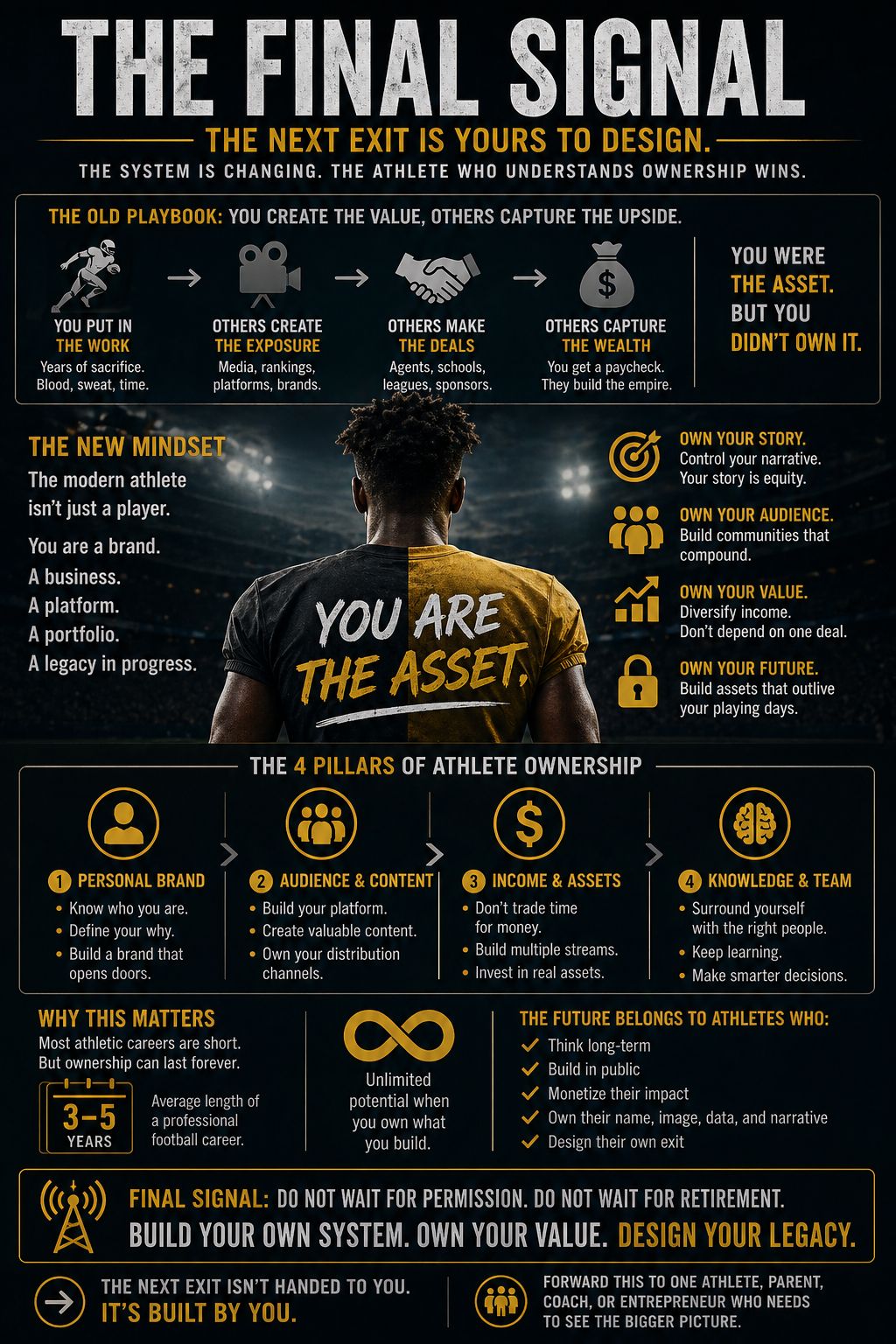
FINAL SIGNAL
Do not wait until draft night to think about business.
Do not wait until retirement to build a platform.
Do not wait for someone else to hand you value you already created.
The smartest athletes of the next decade will recognize something early:
They are not just participants in the system.
They are the asset.
And assets that understand ownership move differently.
If this made you think, forward it to one athlete, parent, coach, or entrepreneur who still believes the game ends when the whistle blows.
CTA
This press room runs on attention.
The partners here fund the system.
If something’s relevant—tap in.
That’s the trade.
Now—
You’ve been sitting in a perfectly sized world.
Break that.
50 squats
25 push-ups
60-second wall sit
No customization.
No upgrades.
Just you vs reality.
Because the real edge?
Is building a system around you—
before the world forces one onto you.