- The Athletic Entrepreneur
- Posts
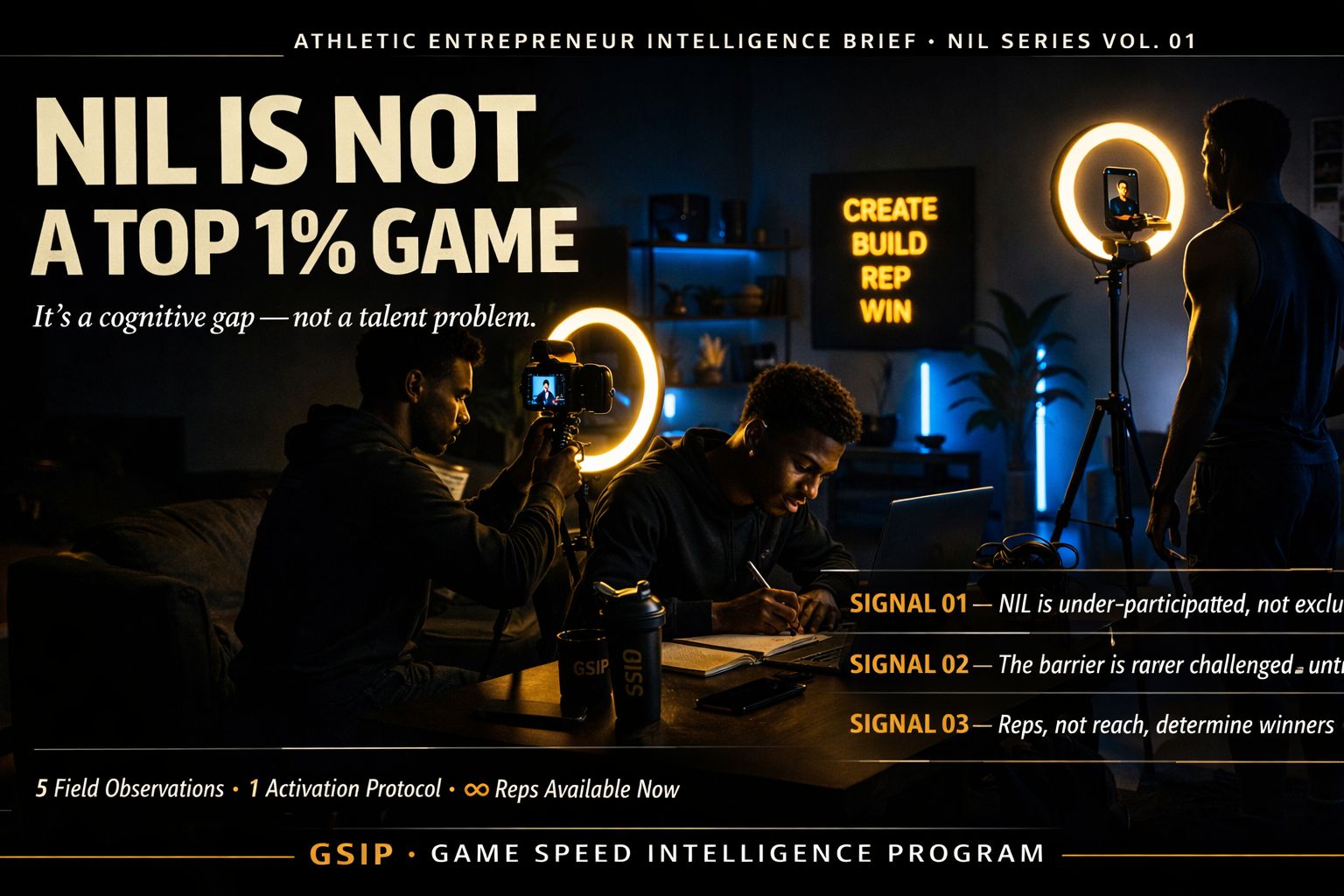
- Why Most Athletes Think NIL Is Only for the Top 1%.
Why Most Athletes Think NIL Is Only for the Top 1%.
And why that belief is costing them money right now.

Michael Kennedy
April 02, 2026
In partnership with

Scale Your IRL Campaigns Like Digital Ads

Out Of Home advertising has long been effective but hard to scale—until now. AdQuick makes it simple to plan, deploy, and measure campaigns with the same efficiency and insight you expect from online marketing tools.
Marketers agree: OOH is powerful for brand growth, driving new customers, and reinforcing messaging. AdQuick makes it easy, intuitive, and data-driven—so you can treat real-world campaigns like any other digital channel.
I did 50 squats straight before I wrote this newsletter. How many are you going to do after you read it? Don't cheat yourself.
Anyway…
THE CORE QUESTION
Why do most athletes believe NIL is only for the top 1%?
Because everything they see reinforces it.
THE BREAKDOWN
1. THE HIGHLIGHT ILLUSION-MEDIA DISTORTION Turn on social media and what do athletes see? Million-dollar NIL deals, top athletes signing major endorsements, and viral success stories. This creates a false data set.
What athletes are not seeing are the D2 athlete making $500/month from a local gym, the volleyball player building a niche audience, or the athlete monetizing skills through training content.
The algorithm shows outliers, not reality.
2. THE OLD SYSTEM STILL LIVES IN THEIR HEAD
For decades, the model was simple: be elite, go pro, then make money. NIL flipped that overnight. But mentally, most athletes are still operating in a pre-NIL world.
They believe exposure must come first, authority must be granted, and opportunity must be earned through performance.
The reality now is different. You can build while you develop, monetize before you’re elite, and you are a media company the moment you have a phone.
3. LACK OF EDUCATION (NOBODY TAUGHT THEM THE GAME)
Most athletes do not understand personal branding, do not know how to pitch brands, and do not know what value they offer.
So they default to “I’m not big enough yet.”
That is not a truth. That is uncertainty disguised as logic.

A large follow count is overrated. Its all about the engagement layer
4. THE FOLLOWER COUNT TRAP
Athletes think no followers means no NIL. But NIL is not just influence. It is attention, trust, and niche value.
An athlete with 800 followers can land a local trainer partnership. At 1,200 followers, with serious engagements, they can promote youth camps. At 2,000 followers with engagement, they can secure affiliate deals.
Brands are not always looking for reach. They are looking for authenticity, engagement, local relevance, and consistency.
5. FEAR OF LOOKING “TRY-HARD”
This is the silent barrier. Athletes worry about what teammates think or whether they look like they are doing too much. So they stay inactive.
Meanwhile, the ones who post build leverage, visibility, and opportunity.
Ego protection leads to opportunity loss.
WHY THIS MINDSET HOLDS ATHLETES BACK
NIL is not a gate. It is a participation economy.
If an athlete believes it is only for the 1%, they do not start, do not experiment, and do not build reps. In their world, the barrier becomes real.
THE BREAKTHROUGH
NIL is not earned. It is built.
WHAT ATHLETES NEED TO DO
Shift identity. Stop thinking “I’m just an athlete” and start thinking “I’m an athlete and a brand, and I need to engage and not act like I am bigger than my audience.”
Start before you are ready. Document workouts, share routines, show the journey. Focus on the process, not just highlights.
Think local first. The first NIL deal is likely a local gym, restaurant, or trainer — not a national brand.
Build consistency. Post regularly, share value daily, stay visible. Brand reps compound just like training reps.
Create, engage, instead of waiting. Opportunities are created, not given.
FINAL TAKE
Athletes do not believe NIL is for the 1% because it is true. They believe it because they only see the top, were never taught differently, confuse visibility with value, and are afraid to start.
NIL is not a leaderboard. It is a distribution game.
Distribution is available to anyone with a phone, a perspective, and consistency.
The athletes who start early will not just benefit from NIL. They will define it.
—Share this newsletter with someone who may benefit from this